
Contemplations on Grief
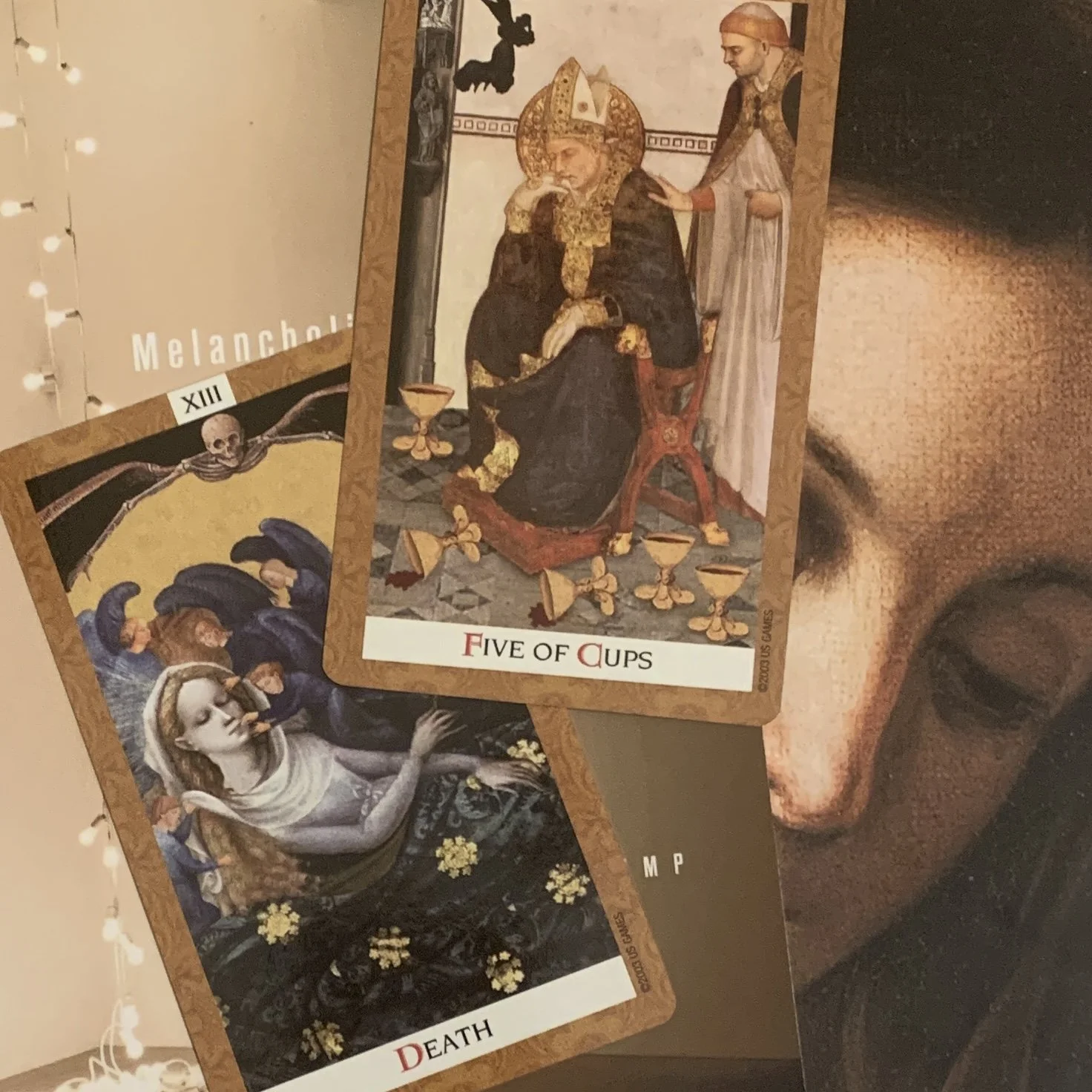

I’ve been thinking a lot about death and loss lately: the proliferation and ceaselessness of current genocides—our global history of genocide—the rage, horror and helplessness I feel about the plurality of its normalization ; state-sanctioned abductions, people disappeared into camps, prisons ; learning that my great-great grandmother was a victim of the Mormon Indian Placement Program ; the passing of a grandmother to whom I felt particularly kin—her life a glimpse of what mine likely would have been had I also been born in a different time ; watching my sister-friend bear the loss of her own mother with compassionate courage and grace ; so many close friends who have found themselves relating intimately to life-threatening illness ; piqued awareness of loved ones who do not love themselves and so self-punish into slow decline ; a visitation from an ancestor seeking help with healing work for her own violent death ; my witnessing a beautiful egret hit and smashed multiple times, displaced from its environment and dying at the side of the road ; the loss of the natural world around us—a loss that feels acute and sublime in its rapidly creeping magnitude. All this: the constant whir of the quiet anguish that is living in a world whose structures do not mirror a value for dignity.
This year I have grown a heightened awareness of fear that I’m not strong enough to be in and with—not strong enough to support all of this. This year I have grown a heightened awareness of the need to grow my capacity to be in and with these things.
I’m realizing that I haven’t yet learned how to grieve. There’s so much… there’s too much to grieve in this world, individually and socially. And for myself, I’m just starting to approach my own small sadnesses of the loss of alternate versions of self: failed or unrealized dreams and ambitions ; my struggle to accept the slowness of my own individual pace and the accompanying anxiety that the leak of time is sucking the air out of the container of this my one precious life. Time and life move too fast and I move, oh, so slow. Time and life move too fast and there is, at every turn, so much to rebuff.
And here is what I’m coming to know—what I’ve been learning from friends and mentors:
Grief is not a thing to be fixed or healed:
What grief asks is for loving time and present attentiveness.
Grief is a sister to love and love is alive in grief.
Grief reveals with incomparable clarity that which we love and value.
Grief calls on us to give it expression.
So, here is my expression of grief. I woke in nausea, brimming with it, and only settled when I had made my grief manifest with these words. I’ve been asking myself: how can I build community around creating space for grief? How can we come together in grief so that we may come together more fully otherwise—equipped with the clarity of what our grief brings into view and the enlivening relief of creating from it.
Constellations:
ANOHNI. “Another World.” The Crying Light. Released by Secretly Canadian, 2009. [Song]
Black, Kat. Golden Tarot Deck. Published by U.S. Game Systems, 2004. [Tarot Deck]
Crimp, Douglas. “Mourning and Militancy.” Melancholia and Moralism: Essays on AIDS and Queer Politics. Published by MIT Press, 2004, pp. 130-149. [Article]
Monk, Meredith, and Walcott, Collin. “Fear and Loathing in Gotham: Gotham Lullaby.” Dolman Music. Released by ECM New Series, 1981. [Song]
Ross, Dennis S. A Year with Martin Buber: Wisdom on the Weekly Torah Portion. Published by the University of Nebraska as a Jewish Publication Society Book, 2021. [Book]
Strand, Clark, and Perdita Finn. The Way of the Rose: The Radical Path of the Divine Feminine Hidden in the Rosary. Spiegel & Grau, 2019. [Book]
von Bingen, Hildegard, and D’Angelo, Emily, and Hakhnazaryan, Mikayel. “O frodens virga (Arr. Missy Mazzoli).” enargeia. Released by Deutsche Grammophon, 2021. [Song]